Updated oncology guidelines for Breast, Ovarian, and Pancreatic Cancer Risk Assessment
The National Comprehensive Cancer Network (NCCN) provides oncology guidelines for genetic/ familial high-risk assessment. According to the recently updated guideline (accessed in August 2021), additional genes were recommended to be tested alongside with BRCA1/2.
The risk assessment guidelines before 2020 highlighted BRCA1 and BRCA2 genes as the major risk factors of breast, ovarian, and pancreatic cancers. The gene list has been expanded based on solid evidence that genes other than BRCA1/2 have proven to be increasing the risk of breast and ovarian cancers.
Risk genes associated with Breast, Ovarian, and Pancreatic cancer
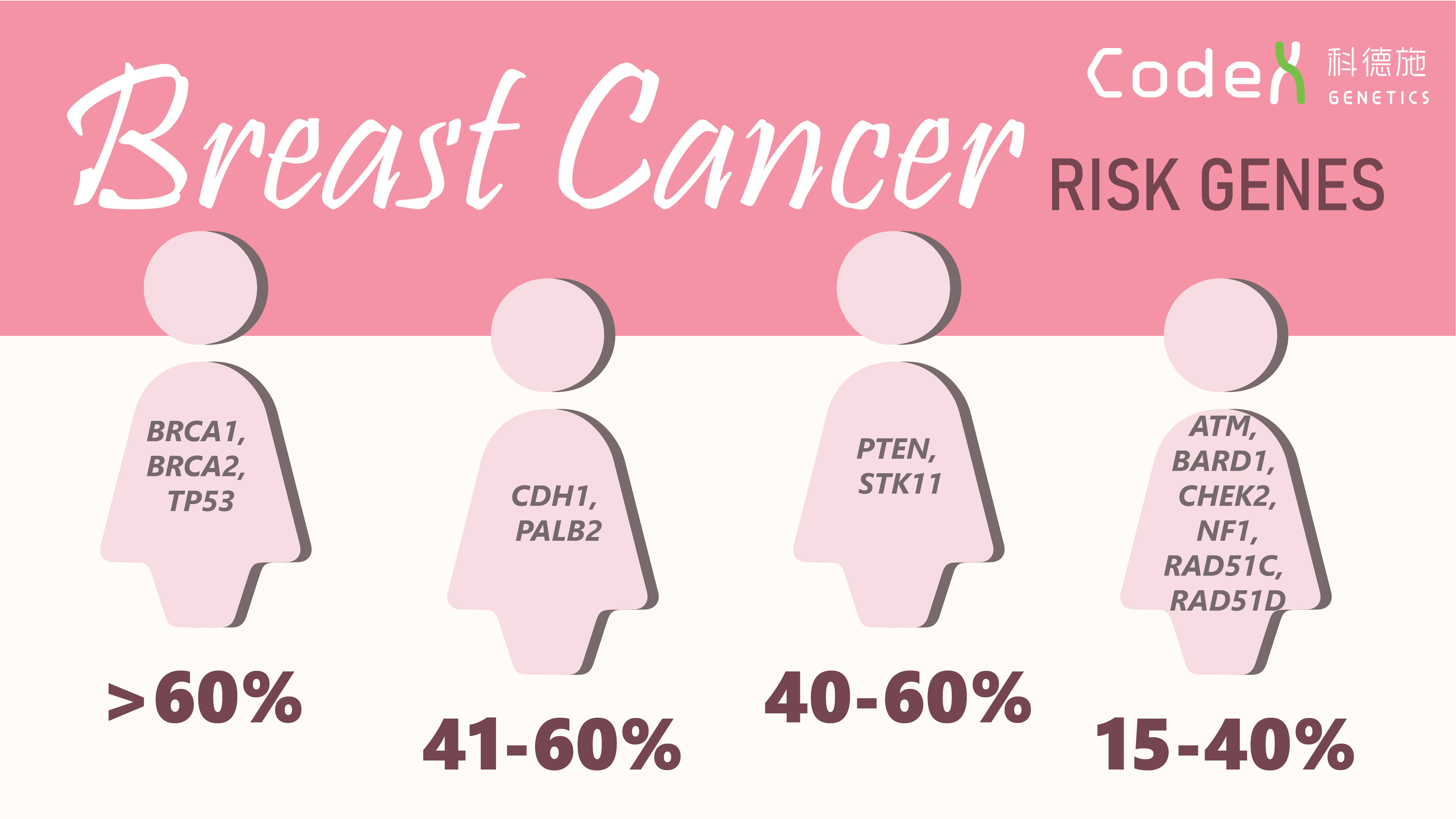
An expanded gene list summarized in the NCCN guideline1 provides the lifetime genetic risk factors for breast, epithelial ovarian, and pancreatic cancer.
| Gene | Breast cancer lifetime risk | Ovarian cancer lifetime risk | Pancreatic cancer lifetime risk | | --- | --- | --- | --- | | ATM | 15%-40% | <3% | ~5%-10% | | BARD1 | 15%-40% | / | / | | BRCA1 | >60% | 39%-58% | ≤5% | | BRCA2 | >60% | 13%-29% | 5-10% | | BRIP1 | / | >10% | / | | CDH1 | 41%-60% | / | / | | CDKN2A | / | / | >15% | | CHEK2 | 15%-40% | / | / | | MSH2, MLH1, MSH6, PMS2, EPCAM | <15% | MLH1, MSH2: >10% MSH6: ≤13% PMS2: <3% EPCAM: <10% | <5%-10% | | NF1 | 15%-40% | / | / | | PALB2 | 41%-60% | 3%-5% | 5%-10% | | PTEN | 40%-60% | / | / | | RAD51C | 15%-40% | >10% | / | | RAD51D | 15%-40% | >10% | / | | STK11 | 40%-60% | / | >15% | | TP53 | >60% | / | 5%-10% |
Remark: “/” = unknown or insufficient evidence, or no established association
Genes such as CDH1, TP53, PALB2, and PTEN contribute almost as much risk as BRCA1/2 in breast cancer. Some genes on the above list are also associated with other cancer risks. For example, BRCA1 and BRCA2 are associated with prostate cancer risk in males; CDH1 is associated with hereditary diffuse gastric cancer risk.
Multi-gene testing for breast cancer
Individuals who meet the genetic testing criteria (i.e. personal or family cancer history) but tested negative with previous genetic tests are suggested to consider multi-gene panel testing to cover more risk genes.
Source:
- NCCN Clinical Practice Guideline in Oncology. Genetic/Familial High-Risk Assessment: Breast, Ovarian, and Pancreatic, Version 1. 2022
#breast-cancer #ovarian-cancer #pancreatic-cancer #NCCN ancer,ovarian-cancer,pancreatic-cancer,NCCN"